Who Benefits Most From AI Proposal Software?
When most people hear "AI proposal software," they assume it's enterprise technology built for large firms with dedicated proposal departments, six-figure software budgets, and teams of coordinators managing hundreds of RFPs per year. They assume it's not for them.
That assumption is wrong. And it's costing smaller firms, independent contractors, and lean proposal teams real money in lost contracts every month.
The truth is that AI proposal software delivers its biggest results not for large firms that already have the resources to respond to proposals efficiently, but for the smaller, leaner organizations that are currently losing ground to better-resourced competitors. Here's who benefits most and why.
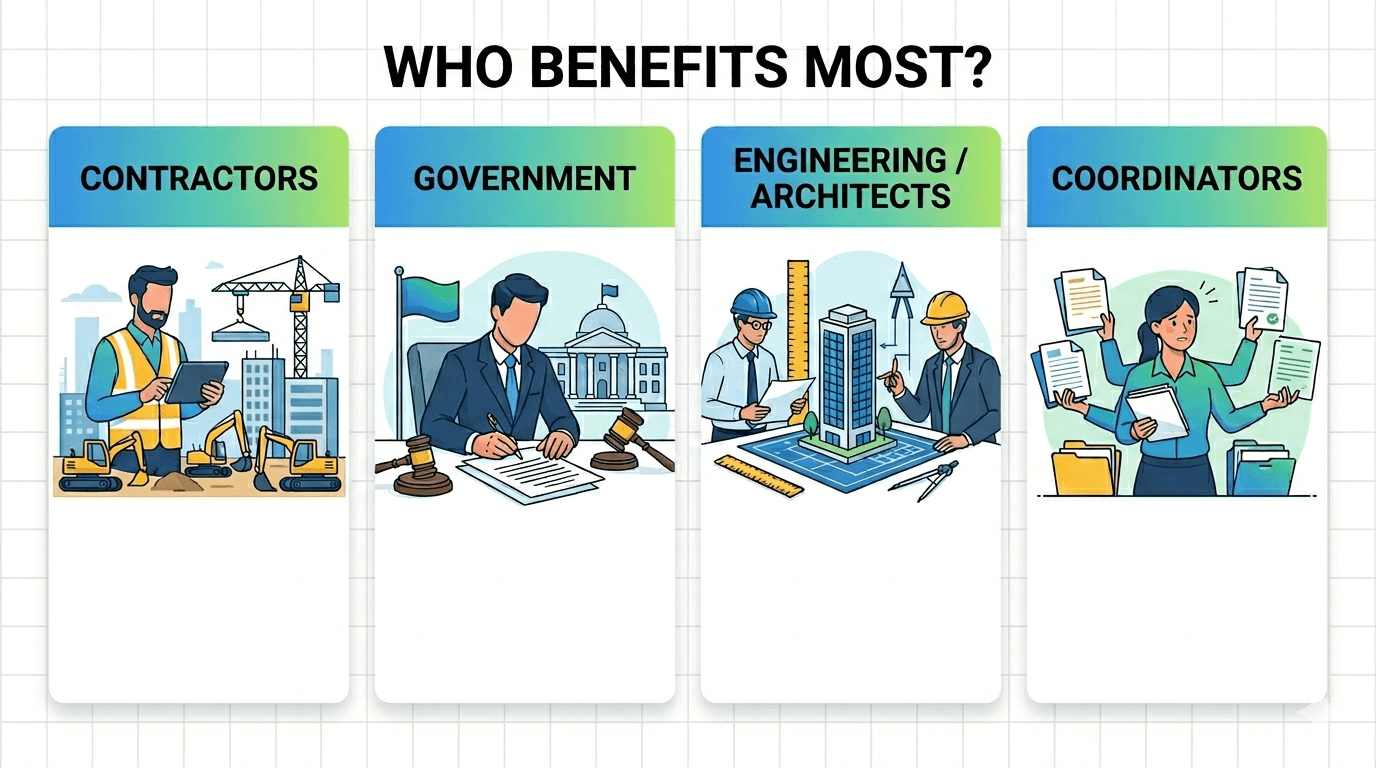
Small and Mid-Size Construction Contractors
Small contractors are the segment that gains the most from AI proposal software, and the reason is straightforward. Large construction firms have proposal departments. They have writers, coordinators, compliance specialists, and content managers whose entire job is responding to RFPs. They have content libraries built over decades. They have systems and processes refined over hundreds of proposals.
Small contractors have a project manager who writes proposals between site visits, a coordinator juggling three jobs at once, or an owner sitting down on Sunday nights to work on bids. They have content scattered across personal computers and email threads. They have no system, no library, and no time.
AI proposal software gives small contractors the infrastructure that large firms have spent years building. A centralized content library. Automated compliance checking. AI-assisted drafting that produces targeted, specific responses instead of rushed generic ones. The playing field doesn't level completely, but it gets dramatically more even.
Small contractors using AI proposal software are competing effectively against firms twice their size, winning contracts they would have lost before, and doing it without hiring additional proposal staff. For a small construction business where winning one additional contract per month means hundreds of thousands in additional revenue, that competitive advantage is transformative.
Government Contractors
Federal and municipal contracting is notoriously difficult for small businesses. The proposal requirements are complex, the compliance standards are strict, and the competition includes large established firms with dedicated government contracting divisions and proposal teams that do nothing else.
Small businesses certified under programs like 8(a), HUBZone, SDVOSB, and WOSB have preferential access to certain contract opportunities, but preferential access only matters if you can actually respond to the opportunities. Many small government contractors turn down RFPs not because they're unqualified but because they don't have the bandwidth to respond properly.
AI proposal software changes this calculation dramatically. Automated compliance checklists ensure nothing gets missed in complex federal RFPs where a single missed requirement means automatic disqualification. AI drafting using uploaded past performance documentation, team resumes, and technical approach content means small businesses can produce professional, compliant proposals that compete with submissions from much larger firms.
For small government contractors, AI proposal software is often the difference between having a viable government contracting business and having a certification that never translates into actual contracts.
General Contractors and Subcontractors
Both general contractors and subcontractors face the same fundamental proposal challenge: they need to bid on significantly more work than they expect to win, which means they need to respond to a high volume of RFPs and RFQs every month.
For general contractors, proposals typically require extensive documentation of past projects, safety records, bonding capacity, team qualifications, and project approach narratives. The content requirements are substantial and similar across most bids, which makes a well-organized content library particularly valuable. Once your library is built, the content for the next proposal is largely already written. You're assembling and customizing rather than creating from scratch.
For subcontractors, the proposal challenge is different but equally pressing. Subs often need to respond quickly to GC solicitations with limited turnaround time. The ability to rapidly produce a specific, targeted response using existing content is a significant competitive advantage when GCs are reviewing multiple sub proposals and making fast decisions.
Both groups benefit enormously from the time savings AI proposal software provides. More bids submitted with the same team means more opportunities to win work, which means more revenue without proportional increases in overhead.
Engineering and Architecture Firms
Architecture and engineering firms respond to qualification-based RFPs that are heavy on team credentials, past project documentation, and technical approach narratives. These proposals are often lengthy and require careful curation of project examples that specifically match the scope and requirements of each opportunity.
The challenge for A/E firms is that every project selection decision requires judgment. Which of your 50 past projects best demonstrates the specific capabilities this client is asking for? Which team members have the most relevant experience for this particular scope? How do you present your approach in a way that differentiates you from competitors with similar technical qualifications?
AI proposal software helps A/E firms surface the most relevant content from their library, draft project descriptions that highlight the specific aspects most relevant to each RFP, and format team resumes to emphasize the qualifications the client is looking for. The result is proposals that feel tailored and specific rather than pulled from a standard boilerplate package.
For A/E firms competing on qualifications rather than price, the quality and specificity of the proposal is often the primary differentiator. AI software that consistently produces specific, targeted content gives these firms a measurable advantage.
Proposal Coordinators Managing High Volume
Individual proposal coordinators are often the unsung heroes of the construction and government contracting industries. They manage multiple proposals simultaneously, coordinate content from multiple contributors, ensure compliance across dozens of requirements, and do it all under constant deadline pressure.
Burnout in proposal coordination is real and common. The combination of high volume, tight deadlines, and the administrative overhead of hunting for content and reformatting documents creates a workload that's genuinely unsustainable for many coordinators over the long term.
AI proposal software fundamentally changes the nature of the proposal coordinator role. The administrative overhead, hunting for content, reading through RFPs for requirements, formatting documents, is largely automated. What remains is the strategic, judgment-driven work that actually requires human expertise. Coordinators who make this transition consistently report lower stress, better work quality, and the ability to manage significantly higher proposal volumes without working longer hours.
For organizations trying to retain talented proposal coordinators, giving them better tools isn't just a productivity investment. It's a retention investment.
The Common Thread
Looking across all these groups, the common thread is clear. AI proposal software delivers its biggest benefits to organizations and individuals whose proposal capability is currently limited by time, resources, or both rather than by expertise or experience.
If you're technically qualified but resource constrained, if you're losing bids not because you're not good enough but because you can't keep up with the volume and complexity of modern proposal requirements, AI proposal software is built for you.
The large firms with dedicated proposal departments will adopt these tools eventually. The competitive advantage belongs to the smaller, more nimble organizations that adopt them first.
Try Pozal.AI free at pozal.ai and see what your proposal operation looks like when time and resources stop being the limiting factor.
Blogs
Read Our Blogs and News
Discover expert insights, trends, and tips that help you navigate the world of finance and technology.