4 Simple Steps to Responding to RFPs Faster Using AI

If you've been in the proposal writing world for any length of time, you've probably tried using AI to speed things up. Maybe you fed an RFP into ChatGPT and asked it to write a technical approach. Maybe you used an AI writing assistant to clean up your boilerplate. And maybe, like most proposal coordinators who've tried this, you were disappointed with the results.
Generic AI tools aren't built for proposal writing. They don't know your company. They don't know your projects. They don't know your team. So they do what they're designed to do - they pull from the internet and generate plausible-sounding content that has nothing to do with your actual experience. In the proposal world, that's not just unhelpful. It's dangerous. Evaluators verify claims. Fabricated experience gets proposals disqualified.
AI proposal writing software is something fundamentally different.
Unlike generic AI tools, purpose-built proposal software is designed specifically around the RFP response workflow. It understands how proposals are structured, what evaluators are looking for, and most importantly, how to use your actual company content to generate responses that are accurate, specific, and targeted.
Here's the core difference: AI proposal writing software only uses content you upload. Your past projects. Your team resumes. Your certifications and qualifications. Your past proposals and boilerplate. The AI drafts responses by pulling from this library of real content, not from the internet. It can't hallucinate fake projects because it's only working with what you've given it.
This matters enormously for proposal accuracy and compliance. Every claim in your proposal is backed by real experience. Every project reference is genuine. Every qualification is verified. You get the speed of AI without the risk of fabricated content.
So how does it actually work in practice?
It starts with your content library. When you first set up AI proposal software like Pozal.AI, you upload all your company content in one place. Past project descriptions, team resumes, safety records, certifications, reference letters, past proposals, methodology documents. Everything that typically lives scattered across shared drives, email threads, and people's computers gets organized into one searchable library. This alone saves hours per proposal before AI even enters the picture.
When a new RFP comes in, you upload it to the platform. The software reads through the entire document and automatically extracts every requirement into a compliance checklist. Instead of manually reading 80 pages line by line hoping you don't miss anything, you get a structured list of everything the evaluator is looking for. This is particularly valuable for federal and municipal RFPs where compliance requirements are strict and missing one can get your proposal rejected outright.
Then comes the AI drafting. You select which sections of the proposal you need to write. The AI analyzes what each section is asking for, searches your content library for the most relevant projects and experience, and drafts targeted responses that specifically address the requirements. When the RFP asks for healthcare facility renovation experience, the AI doesn't write about commercial renovations in general. It pulls your actual healthcare projects with real details and writes a response that directly answers what they're asking for.
You review the AI-drafted content, make edits, add your expertise and judgment, customize the tone and details, and move on to the next section. The AI handles the heavy lifting of pulling content and creating first drafts. You handle the strategic thinking and final quality control.
When the proposal is complete, you export it in a submission-ready format. No reformatting. No copy-paste nightmares. No spending three hours making Word documents look presentable. Just a clean, professional proposal ready to submit.
The result is a proposal process that takes 12-15 hours instead of 40. Responses that are specific and targeted instead of generic and rushed. And a compliance checklist that ensures nothing gets missed before submission.
This is what separates AI proposal writing software from generic AI tools. It's not just making writing faster. It's transforming the entire proposal workflow from a chaotic, stressful scramble into a systematic, efficient process that consistently produces higher quality responses.
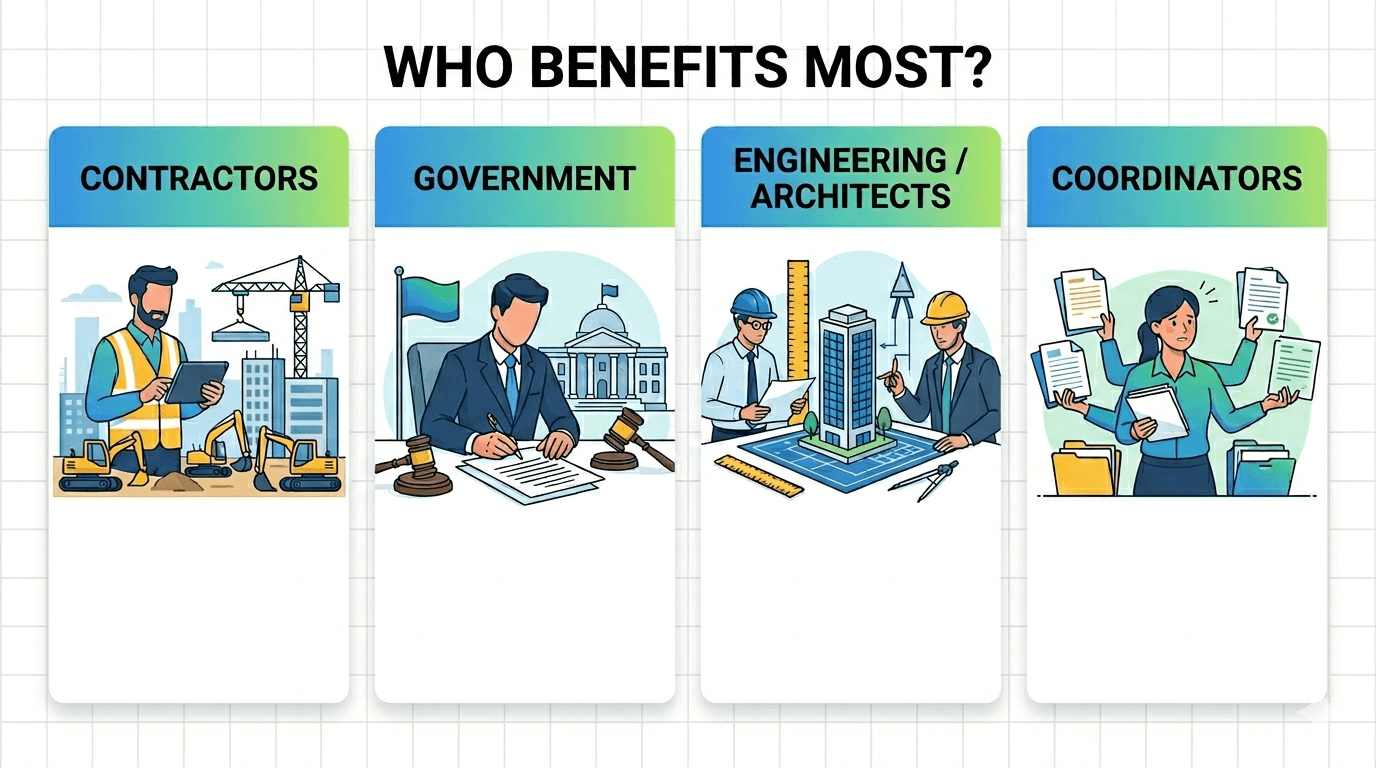
For construction companies, government contractors, engineering firms, and any organization that responds to RFPs regularly, purpose-built AI proposal software isn't just a productivity tool. It's a competitive advantage.
Try Pozal.AI free at pozal.ai and see the difference on your next proposal.
Blogs
Read Our Blogs and News
Discover expert insights, trends, and tips that help you navigate the world of finance and technology.